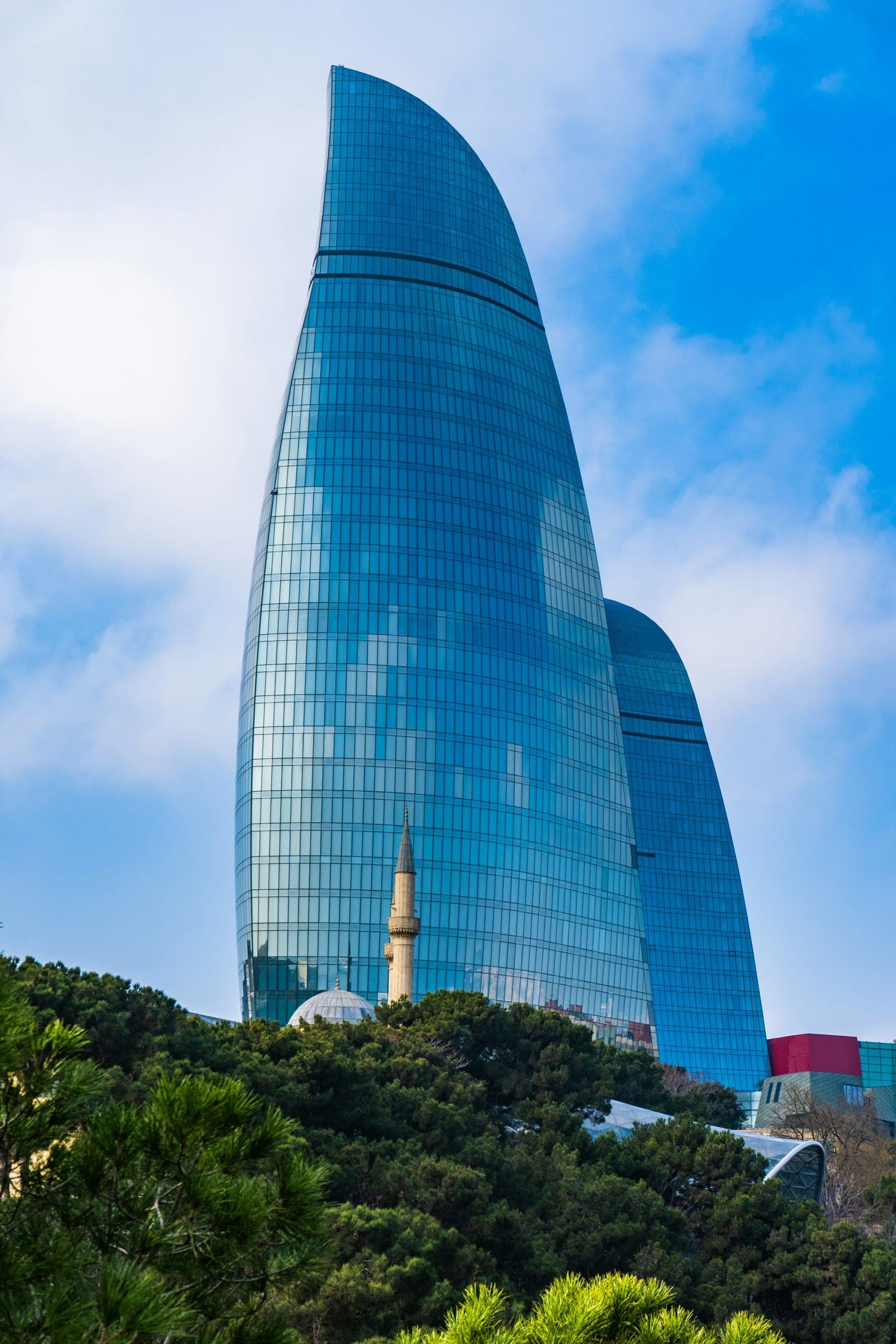
Baku and the Caspian shore
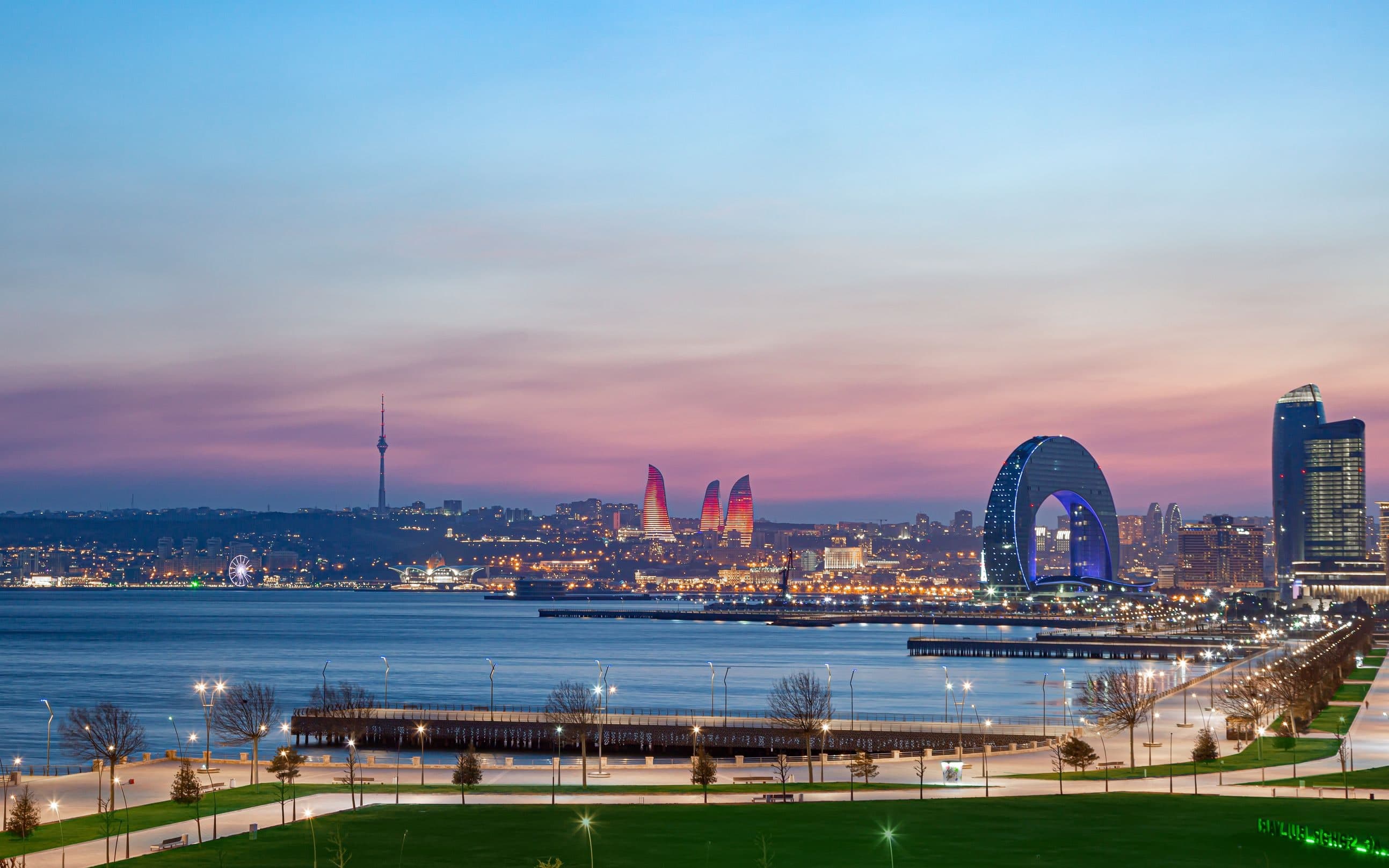
The capital sits on a curved bay of the Caspian Sea. A UNESCO-listed walled Old City presses against a wide modern promenade, with the Flame Towers rising behind. Most trips start and end here.
Plan your trip to Azerbaijan
Azerbaijan reaches from the foothills of the Caucasus mountains down to the western edge of the Caspian Sea. Centuries of trade along the old Silk Road shaped its cities; oil and gas reshaped them again in the twentieth century. What you find now is a country that reads as both ancient and recently rebuilt, and that mixes Turkic, Persian, and Russian influences in everyday life.
Most short trips split between Baku and one or two regional towns. Baku is walkable, friendly to first-time visitors, and very well connected. The regions beyond it feel like a different country: greener, slower, full of pre-Soviet architecture and rural hospitality.
Distances are short. The landscape can change three times in a single day of driving, from a hot coastal city in the morning to mountain villages and old caravanserais by the evening.
Most first trips combine the capital with a short stay outside it. The country is small enough that this works in a long weekend; a week opens up the regions properly.
The capital sits on a curved bay of the Caspian Sea. A UNESCO-listed walled Old City presses against a wide modern promenade, with the Flame Towers rising behind. Most trips start and end here.
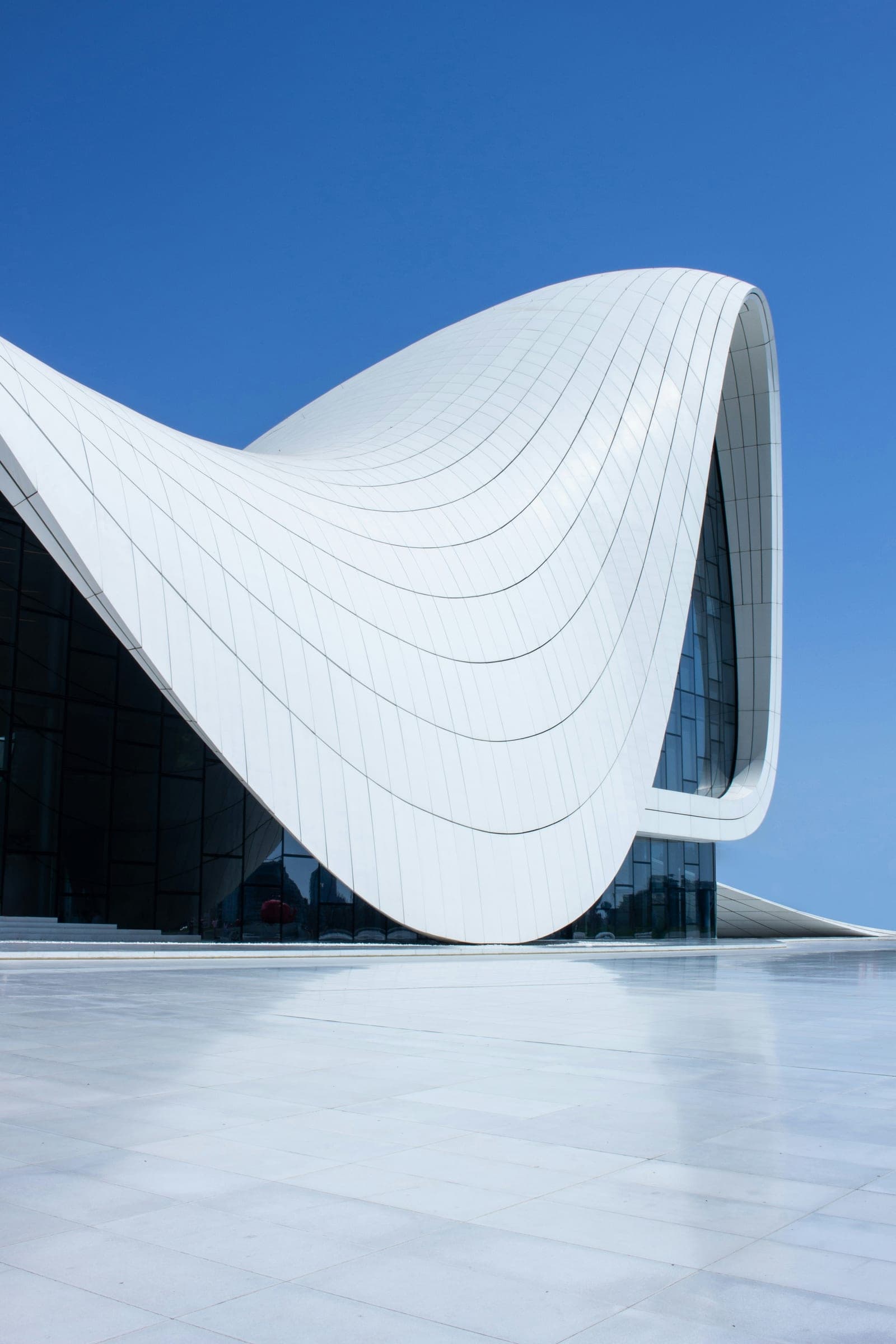
Contemporary architecture by Zaha Hadid, museums of Azerbaijani carpets, modern art galleries, and a deep teahouse and coffeehouse tradition that mixes Persian and Turkish influences.
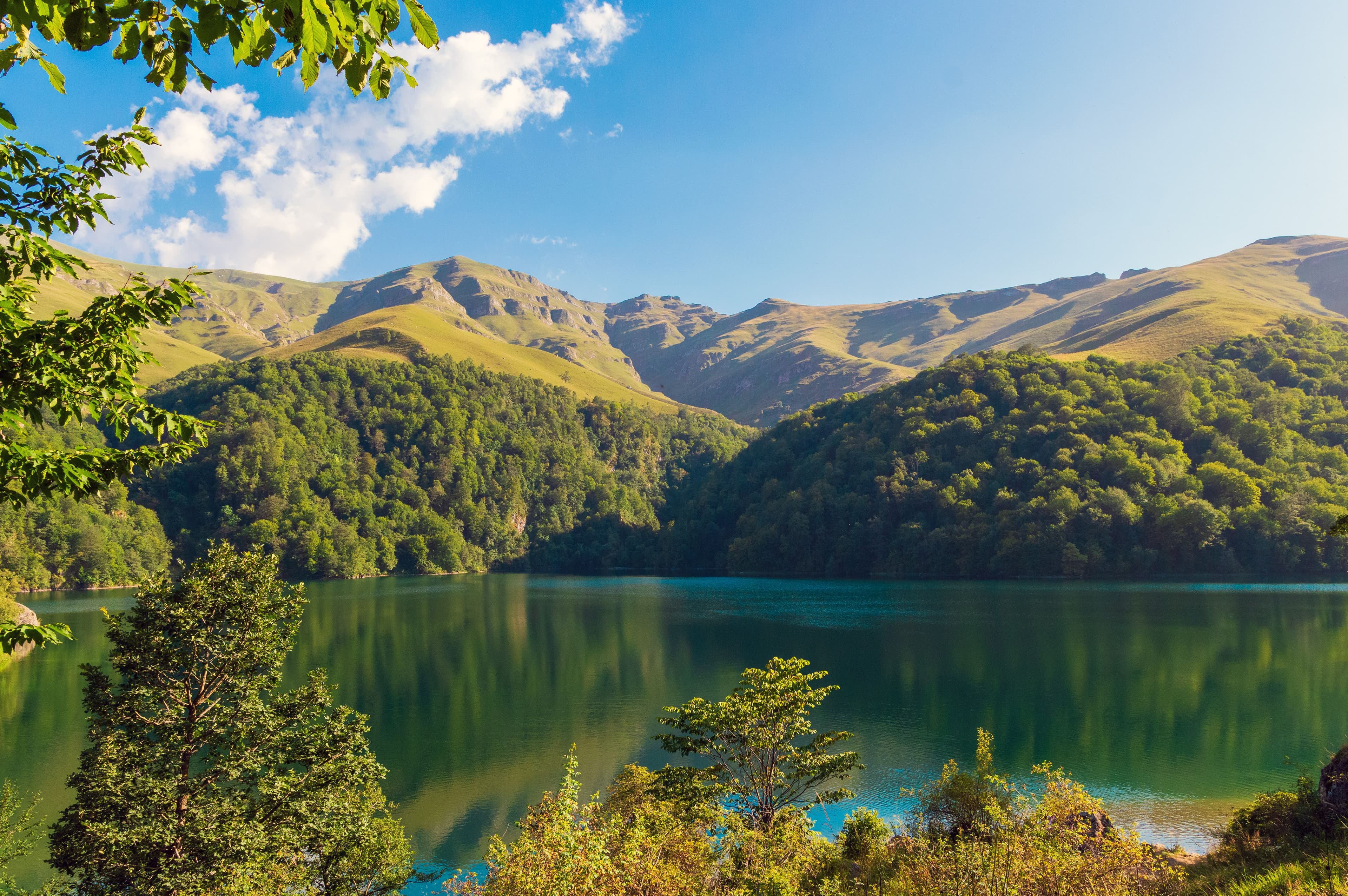
Sheki, Gabala, Quba, and the high villages above Shahdag are short drives from Baku. Hiking and old caravanserais in summer; ski stations through the winter months.
Azerbaijani cooking borrows from its neighbours and keeps its own grammar. Long-simmered stews and dolma, slow-roasted lamb, herbs at every meal, saffron in the rice, walnuts pounded into sauces. The country has more than thirty styles of plov, the rice dish that appears at celebrations.
Try qutab filled with herbs or pumpkin, dushbara dumplings in broth, piti mutton stew baked in a clay pot, and the fresh black tea served in pear-shaped glasses from a samovar. Buy nuts and dried fruit by weight at Yashil Bazar; eat baklava in the Old City; finish with sweet melon from the southern plains in summer.
Azerbaijan uses the Azerbaijani Manat (AZN). Cards are widely accepted in hotels, restaurants, and shops in Baku and other cities. It is worth carrying some cash for smaller towns, markets, and rural areas.
Azerbaijani is the main language; Russian is widely understood across the country. English is increasingly common in Baku's hotels, restaurants, and tourist sites, though less so in remote regions.
Baku has a clean and inexpensive metro and a very walkable centre. Between cities, comfortable trains and long-distance buses connect the main destinations. Ride-hailing apps like Bolt are easy and affordable in town.
Hospitality matters. You will often be offered tea, and accepting is a sign of respect. Day-to-day dress is casual and modern, but modest clothing is appreciated when visiting mosques and religious sites.
Spring (April to May) and autumn (September to October) are the most comfortable seasons, with mild temperatures and little rain. Summers are warm on the coast and cooler in the mountains; winters are mild in Baku.
Comfortable walking shoes for the Old City and seaside promenade. Layers for the mountains, where evenings stay cool even in summer. Modest cover-ups if you plan to visit Bibi-Heybat or other religious sites.
Old caravanserais on the way north, modern architecture in the capital, mountain villages a couple of hours away, and a long coast on the Caspian. Azerbaijan rewards travellers who keep moving.